
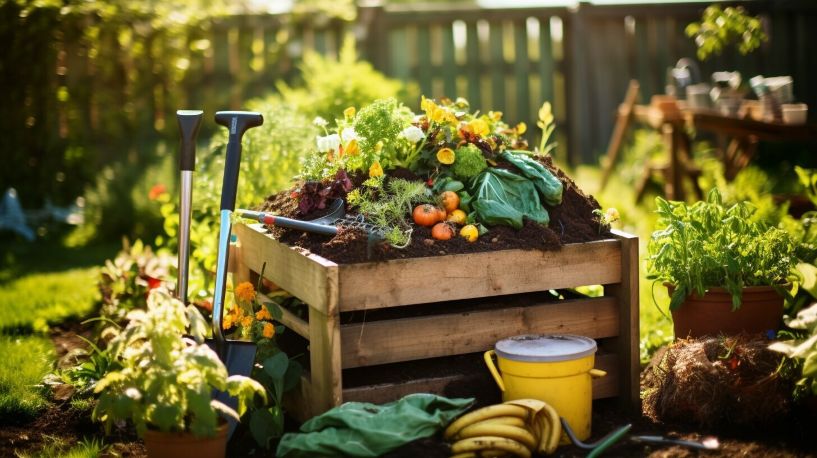
Long before commercial fertilizers and modern waste management systems, communities across Africa developed sophisticated methods for recycling organic matter back into the soil. These traditional composting techniques, refined over generations, offer valuable insights for today's gardeners seeking sustainable, low-cost approaches to soil fertility. As interest in regenerative agriculture grows globally, these time-tested methods are finding new relevance in both rural and urban settings.
This article explores five traditional composting techniques from different African regions, examining how they work, their benefits, and how they can be adapted for contemporary gardens. Each method reflects a deep understanding of local ecosystems and demonstrates the ingenuity of traditional agricultural knowledge.
Trench Composting: The Hidden Fertility System
Practiced widely across southern Africa, particularly in water-scarce regions, trench composting is perhaps the oldest and most straightforward composting method. Unlike surface composting that exposes organic matter to the elements, trench composting involves burying organic materials directly in the soil where they will decompose.
Traditional Practice
In its traditional form, farmers would dig trenches between crop rows or in fallow areas, gradually filling them with layers of kitchen scraps, crop residues, and occasionally animal manure. The trenches would be covered with soil and left to decompose for several months before planting. This method was particularly valuable in regions with seasonal rainfall patterns, as the buried organic matter would retain moisture during dry periods.
Modern Application
Today, trench composting offers an excellent solution for urban gardeners with limited space. The "dig and drop" approach can be implemented in existing garden beds without the need for separate composting bins. It's particularly effective for recycling kitchen waste directly into vegetable gardens.
How to Create a Modern Trench Composting System
- Dig a trench 30-45 cm deep between rows of plants or in areas planned for future planting
- Add a 10 cm layer of kitchen scraps, garden waste, and other compostable materials
- Cover with 5-10 cm of soil
- Continue adding layers as materials become available
- Plant directly above the trench after 2-3 months of decomposition
The benefits of trench composting extend beyond convenience. By placing organic matter directly where plant roots will grow, nutrients are delivered efficiently. The buried materials also improve soil structure and water retention, particularly valuable in sandy soils or drought-prone areas.

Cross-section diagram of a trench composting system showing layers of organic material and soil.
Pit Composting: The Traditional Fertility Hub
Common throughout East and Central Africa, pit composting represents a more concentrated approach to organic waste management. Unlike trench composting that distributes materials across growing areas, pit composting centralizes decomposition in a dedicated location.
Traditional Practice
In traditional communities, compost pits were often communal resources, with multiple households contributing organic waste to a shared pit. These pits, typically 1-2 meters deep and of varying width, would be strategically located near gardens but away from water sources. Materials would be added continuously, with occasional turning to accelerate decomposition. The resulting compost would be harvested seasonally and distributed to fields before planting.
Modern Application
The pit composting approach translates well to contemporary settings where space allows. It offers greater volume capacity than surface composting and maintains more consistent moisture levels, particularly in hot climates. Modern adaptations often include lining the pit with clay or brick to prevent nutrient leaching and covering it during heavy rains.
For urban gardeners, a smaller-scale version can be created using repurposed containers like old barrels or buckets with drainage holes, partially buried to maintain temperature stability. This "mini-pit" approach preserves the benefits of traditional pit composting while adapting to space constraints.
Bokashi Fermentation: Traditional Wisdom Meets Modern Science
While often presented as a Japanese innovation, fermentation-based composting has deep roots in various African traditions, particularly in forest regions where rapid decomposition was essential. These methods use microbial inoculation to accelerate the breakdown of organic matter through fermentation rather than aerobic decomposition.
Traditional Practice
In traditional West African practices, specific forest soils known to contain beneficial microorganisms would be collected and mixed with organic waste. These "starter cultures" would initiate fermentation, breaking down materials quickly while minimizing odors. The process was often conducted in covered pits or clay containers to maintain anaerobic conditions.
Modern Application
Today's bokashi systems refine this approach using specific microbial inoculants, often based on effective microorganisms (EM) technology. The modern bokashi process is particularly valuable for apartment dwellers or those with limited outdoor space, as it can be conducted entirely indoors in sealed containers.
Creating a Traditional-Inspired Bokashi System
- Collect soil from a healthy, established forest area (particularly under decomposing logs)
- Mix this soil with rice bran or wheat bran and a small amount of molasses
- Allow this mixture to ferment in a covered container for 2 weeks
- Use this starter culture by sprinkling it between layers of kitchen waste in a sealed container
- After 2-3 weeks of fermentation, bury the pre-composted material in garden soil to complete the process
The bokashi approach offers several advantages for modern gardeners. It processes food waste quickly, including meat and dairy that traditional composting methods cannot handle. The fermentation process also preserves more nutrients than aerobic composting, resulting in a highly nutritious soil amendment.
Basket Composting: In-Garden Fertility Stations
Practiced widely in humid tropical regions, particularly in Central Africa, basket composting represents an elegant integration of composting and irrigation. This method creates concentrated fertility zones within garden beds, supporting nearby plants while continuously generating compost.
Traditional Practice
In its traditional form, farmers would weave large baskets from local plant materials like palm fronds or reeds. These baskets, approximately 1 meter in diameter and height, would be placed directly in garden beds and filled with alternating layers of green materials (kitchen scraps, fresh plant matter) and brown materials (dry leaves, small branches). As the materials decomposed, nutrients would leach into the surrounding soil, feeding nearby plants. Additionally, water poured into the basket would be enriched with nutrients before seeping into the soil, creating an efficient irrigation system.
Modern Application
Contemporary gardeners can adapt this technique using wire mesh cylinders, repurposed plastic containers with holes, or even purpose-built composting towers. The principle remains the same: creating an in-garden composting station that simultaneously produces compost and delivers nutrients directly to growing areas.
This approach is particularly valuable for intensive vegetable production in small spaces. By positioning basket composters strategically throughout a garden, nutrients and moisture can be distributed efficiently while continuously recycling organic waste.

A modern adaptation of basket composting using wire mesh, positioned in the center of a vegetable garden.
Vermicomposting: The Ancient Art of Worm Farming
While often considered a modern innovation, the deliberate use of earthworms to process organic matter has ancient roots across Africa. Traditional farmers recognized the value of earthworm activity and developed methods to encourage these beneficial organisms in their agricultural systems.
Traditional Practice
In traditional systems, farmers would create dedicated areas for worm cultivation by layering organic materials in shallow pits and maintaining specific moisture levels to attract and support earthworm populations. These areas would be covered with palm fronds or other materials to maintain darkness and humidity. Over time, the worm-processed material would be harvested and applied to high-value crops.
Modern Application
Contemporary vermicomposting systems refine this approach using specific worm species (typically Eisenia fetida or "red wigglers") in contained environments. Modern systems range from simple homemade bins to sophisticated continuous-flow systems that allow for easier harvesting of worm castings.
Vermicomposting offers several advantages for today's gardeners. The resulting worm castings are exceptionally rich in plant-available nutrients and beneficial microorganisms. The process is also faster than traditional composting, with materials being processed in weeks rather than months. Additionally, properly maintained worm bins produce minimal odor, making them suitable for indoor use in apartments or small homes.
Comparing Traditional Composting Techniques
Each of these traditional methods offers unique benefits and challenges for modern gardeners. The following table provides a comparison to help determine which approach might best suit your specific situation:
| Technique | Space Required | Time to Completion | Maintenance Level | Best For |
|---|---|---|---|---|
| Trench Composting | Minimal (uses existing garden space) | 2-3 months | Low | Direct garden application, small spaces |
| Pit Composting | Moderate (dedicated area) | 3-6 months | Low to moderate | Larger volumes, hot/dry climates |
| Bokashi Fermentation | Minimal (indoor possible) | 2-4 weeks (plus burial time) | Moderate | Indoor composting, all food wastes |
| Basket Composting | Minimal (within garden) | Continuous | Moderate | Combined composting/irrigation |
| Vermicomposting | Small to moderate | 1-3 months | Moderate to high | High-quality compost, indoor possible |
Integrating Traditional Wisdom with Modern Needs
The beauty of these traditional composting methods lies in their adaptability. Rather than viewing them as historical artifacts, we can recognize them as sophisticated systems developed through generations of observation and experimentation. By understanding the principles behind these techniques, modern gardeners can adapt them to contemporary settings while honoring their origins.
Many gardeners find that combining elements from different traditional approaches creates the most effective system for their specific needs. For example, a small urban garden might use trench composting for garden waste, a bokashi system for kitchen scraps including meat and dairy, and a small vermicomposting bin for producing high-quality compost for seedlings and container plants.
"These traditional methods remind us that effective composting doesn't require expensive equipment or complex systems. Our ancestors developed these techniques using careful observation and locally available materials—principles that remain relevant today."
— Dr. Nadia Owusu, Ethnobotanist
Cultural Preservation Through Practice
Beyond their practical benefits, these traditional composting methods represent important cultural knowledge. By practicing and sharing these techniques, we help preserve agricultural traditions that might otherwise be lost. Many Dilulu community garden projects explicitly incorporate traditional composting methods not only for their practical value but also as a way to connect younger generations with their agricultural heritage.
This cultural dimension adds another layer of value to traditional composting practices. When we implement these methods in our gardens, we're not just building soil fertility—we're also honoring and preserving indigenous knowledge systems that have sustained communities for centuries.
Getting Started with Traditional Composting
For those interested in exploring these traditional techniques, we recommend starting small and experimenting to see which methods work best in your specific context. Consider your available space, the types of organic waste you generate, your climate, and your gardening goals.
Dilulu offers workshops on traditional composting techniques in many communities, providing hands-on experience and guidance from experienced practitioners. These workshops often include materials and starter cultures to help participants implement these methods in their own gardens.
Whether you're managing a small balcony garden or several acres, these traditional composting techniques offer valuable tools for building soil fertility sustainably. By looking to the past, we find wisdom that can help us create more resilient and productive gardens for the future.


